
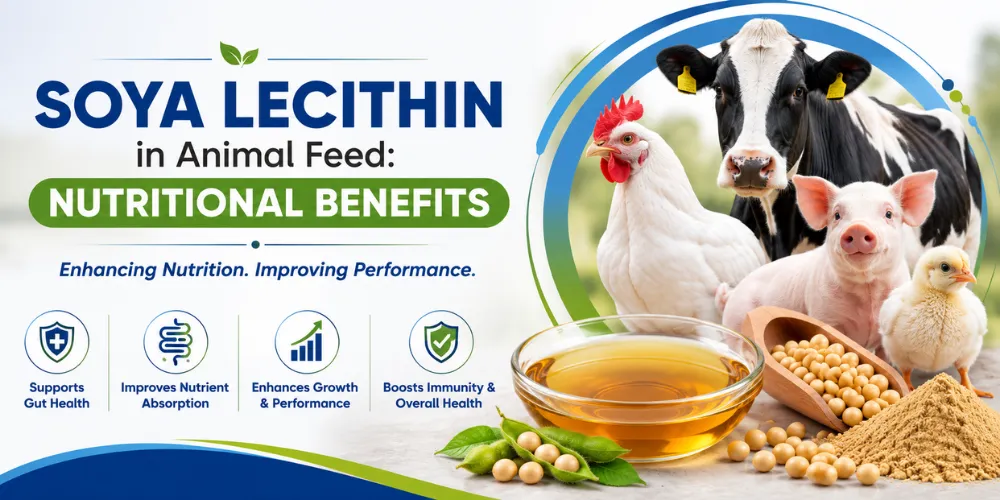
Soya Lecithin in Animal Feed: Nutritional Benefits
Introduction
Animal nutrition has changed a lot in recent years. Feed is no longer just about energy and protein. It now focuses on digestion, absorption, and overall animal health.
Soya lecithin plays an important role in this shift. It is widely used in poultry cattle aquaculture and pet food. It improves fat digestion and supports better nutrient use.
This article explains how soya lecithin works in animal feed. It shares real industry insights and research-backed benefits. It will help you decide if it is right for your formulation.
What is Soya Lecithin
Soya lecithin is a natural phospholipid. It is extracted during soybean oil processing.
It contains:
-
Phosphatidylcholine
-
Phosphatidylethanolamine
-
Phosphatidylinositol
These compounds help mix fat and water. This makes lecithin a strong emulsifier.
In animal feed, this property improves fat digestion and nutrient absorption.
Why Fat Digestion Matters in Animal Feed
Fat is a dense energy source. It is important for growth and productivity.
But animals often struggle to digest fats efficiently. This is more common in:
-
Young chicks
-
Piglets
-
Aquaculture species
Poor fat digestion leads to:
-
Lower energy availability
-
Slow growth
-
Feed wastage
Soya lecithin helps solve this problem.
“In early life stages animals have limited bile production. Lecithin supports fat digestion during this critical phase.”
How Soya Lecithin Works in Feed
Soya lecithin acts as an emulsifier. It breaks large fat droplets into smaller ones.
This process:
-
Increases surface area
-
Helps enzymes act faster
-
Improves fat absorption
Better fat digestion means better energy use.
Key Nutritional Benefits of Soya Lecithin
1. Improved Energy Utilization
Animals get more energy from the same feed. This improves feed efficiency.
2. Enhanced Growth Performance
Better nutrient absorption supports faster growth.
This is especially important in broilers and piglets.
3. Better Gut Health
Lecithin supports intestinal integrity.
It helps maintain healthy cell membranes in the gut.
This improves nutrient absorption over time.
4. Reduced Feed Cost
Improved fat digestion allows for use of lower-cost fats.
This reduces overall formulation cost without affecting performance.
“Feed formulators use lecithin not just for nutrition but also for cost optimization. It allows flexibility in raw material selection.”
Applications Across Animal Segments
Poultry
Soya lecithin is widely used in broiler feeds.
It improves:
-
Weight gain
-
Feed conversion
-
Fat digestion
Swine
Piglets benefit from lecithin due to immature digestive systems.
It helps:
-
Improve fat absorption
-
Support early growth
Aquaculture
Fish and shrimp need efficient lipid digestion.
Lecithin helps:
-
Improve lipid utilization
-
Support growth in aquatic species
Dairy Cattle
Lecithin supports energy metabolism in high-producing cows.
It helps manage:
-
Energy balance
-
Milk production efficiency
Role in Young Animal Nutrition
Young animals have underdeveloped digestive systems.
They produce less bile and enzymes.
This limits fat digestion.
Soya lecithin compensates for this gap.
It improves fat emulsification and absorption during early growth stages.
“The first few weeks of animal growth define long-term performance. Lecithin plays a small but critical role here.”
Impact on Feed Formulation
Feed formulators use lecithin for both functional and nutritional benefits.
It helps:
-
Improve mixing of ingredients
-
Reduce dust in feed
-
Enhance pellet quality
This improves overall feed stability and handling.
Liquid vs Powder Lecithin in Feed
Both forms are used in feed industry.
Liquid Lecithin
-
Easier to blend with oils
-
Cost-effective
Powder Lecithin
-
Better for dry feed formulations
-
Easier handling and storage
Choice depends on the formulation type and processing method.
Future of Lecithin in Animal Nutrition
The demand for efficient feed is increasing.
Soya lecithin will continue to play a role in:
-
Sustainable feed formulations
-
Cost-effective nutrition
-
Improved animal health
With a rising focus on performance and efficiency, its use is expected to grow.
“As feed costs rise the focus shifts to efficiency. Ingredients like lecithin become more valuable in modern formulations.”
Conclusion
Soya lecithin is more than an emulsifier. It is a functional ingredient that improves fat digestion, energy use, and overall feed efficiency. It supports growth in poultry, swine, aquaculture, and dairy. For feed manufacturers, it offers both nutritional and economic benefits. If used correctly, it can improve performance without increasing costs. This makes it a valuable component in modern animal nutrition.
